Wednesday, September 18, 2024

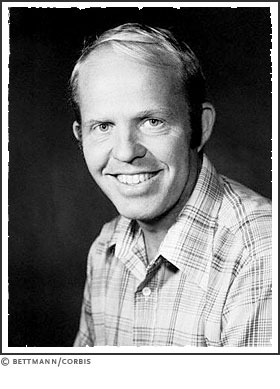
William Lloyd Garrison

My name is William Lloyd Garrison. Today, I am known as a brave hero who fought long and hard against the evils of slavery, but over one hundred and fifty years ago, I was not seen as such a hero. Ever since I was a young boy, life always felt like it had the upper hand on myself and my family. I was born into a poor family in the shipping port town of Newburyport, Massachusetts, where my father deserted my mother and my siblings shortly after. After my father's departure, I was forced to work hard from a young age selling candy and delivering wood just so my mother could provide for us all. Unfortunately, she could not, and I was sent to live with a Baptist priest, where I was educated until I was eleven years old. Shortly after returning home, I began my apprenticeship as a writer and editor of the Newburyport Herald at just thirteen years of age. From that moment, I knew I had found my dream and calling, and I never looked back as a writer and editor. 


For over a decade, I had been around the block with several newspapers taking me in to work for them, along with starting one myself. I founded the Newburyport Essex Courant, which folded soon after its founding as not many agreed with my viewpoints of the old Federalists. However, I see my newspaper going under as a blessing since a few years later I started my work as an activist and abolitionist when I met Benjamin Lundy.

Benjamin and I worked as editors for the Genius of Universal Emancipation in 1829, where we began our work to push for emancipation and also for the abolishment of slavery. Benjamin had founded the newspaper back in 1821, as he had been working for years to spread his beliefs on slavery. Together, we worked tooth and nail for the better part of two years to share our thoughts on slavery and the negatives behind it with the world. In doing so, I found myself in jail for one instance as I was charged with defamation against a coastal slave trader. As I said before, life always seemed to have the upper hand on me, and here I was speaking up for what I believed was right and I was being thrown in jail for doing so. 

It was my time to leave Benjamin when I founded The Liberator in 1830 in my home state of Massachusetts. This newspaper had the same goals as my work with Benjamin, which was to push for the emancipation of slaves and the abolishment of slavery as a whole. The Liberator is known as my most famous work as it served its role in printing stories and articles promoting emancipation up until 1865 when my work was finished and slavery was abolished. Outside of my newspapers, I founded the New England Anti-Slavery Society while also playing a major role in founding the American Anti-Slavery Society. Both of these societies worked to chip at the armor of slave owners and wear them down through editorials that renounced slavery and targeted the slave owners for their wrongdoing. 


As the American Anti-Slavery Society grew in popularity, I decided to combine my efforts with women's suffrage movements while also working towards these equalities without taking any form of political action. The two "rules" I had for this society caused several issues among the members, and tensions heavily grew between everyone. This led to the repeated theme of standing up for something I believed in and being targeted for it, as the combination resulted in the formation of two outside societies, the American and Foreign Anti-Slavery Society and the Liberty Party

The American and Foreign Anti-Slavery Society was led by Lewis Tappan as they left the past society we had together due to the added efforts of women's suffrage and participation in emancipation efforts. Other issues included the promotion of religion in abolitionist movements. I, myself, was not a religious man and therefore never believed in the use of religious teachings to fight against slavery. The AFASS believed heavily in religion, leading to the split. The Liberty Party had issues with no political action being taken and formed their own party to nominate a presidential candidate in James Birney to attempt and politically take over to abolish slavery. Birney failed to win the presidency in 1840 and 1844 unlimitedly resulting in the folding of the Liberty Party.


Upon the split of the AASS, I was left to work alone in my fight against slavery apart from the remaining members of the AASS. Until I met a former enslaved man of the name Frederick Douglass. Together Frederick and I pushed against the Union of the United States for our beliefs in the Constitution being pro-slavery. Our work together involved over forty public speeches calling for the Union to be dissolved along with a call for enslaved and free states to be forever separated. 

I worked constantly to fight for my beliefs year after year until the end of the Civil War when my dream was finally accomplished. The push for emancipation and abolishment was over and I was victorious, however, the challenges of the journey left me beaten and in a struggle. Nevertheless, my life's work was complete, a poor boy who grew up with nothing led a life to becoming a leading force in freeing millions of wrongfully enslaved people. 

Sunday, September 15, 2024

Religion + Slavery

Let's start with Islam. In this religion, their holy prophet is a man named Muhammad. Muhammad is seen as the chosen recipient and messenger of the word of God through divine revelations. Based on this, you can see that Muhammad is a highly respected figure in this religion. Well, in various sections of the Quran, Islam's holy book, we are privy to the fact that Muhammad himself owned slaves. “Muhammad began to take slaves after he moved to Medina and had power. Slaves were usually taken in raids on nearby Arab tribes or war, either through offensive or defensive actions.Ibn Qayyim al-Jawziyya, a great scholar and Islamic historian, says in his book "Zad al-Ma'ad, part 1, p. 160, "Muhammad had many male and female slaves. He used to buy and sell them, but he purchased more slaves than he sold. He once sold one black slave for two. His purchases of slaves were more than he sold.

"Muhammad had a number of black slaves. One of them was named 'Mahran'. Muhammad forced him to do more labor than the average man. Whenever Muhammad went on a trip and he, or his people, got tired of carrying their stuff, he made Mahran carry it. Mahran said, "Even if I were already carrying the load of 6 or 7 donkeys while we were on a journey, anyone who felt weak would throw his clothes, his shield, or his sword on me, so I would carry that, a heavy load. Tabari and Jawziyya both record this. Therefore, Islam accepts this as true.These quotes make it seem as though Muhammad was an avid slave owner. Also, not just the fact that he was a slave owner but also the fact that he forced his slaves to do more work than “the average man.This kind of behavior is exhibited through what the religion sees as their prophet, who was chosen by God, making it almost seem as if this exhibited behavior is okay and is also ordained by God. Besides these excerpts, there is also much, much more information exhibiting pro-slavery behavior in Islam's so-called Holy Book. Slaves are as helpless before their masters as idols are before God (Sura 16:77). According to Islam, a Muslim could not be put to death for murdering a slave. Ref. 2:178 and the Jalalayn confirm this. According to this, murdering a slave is almost the equivalent of murdering an animal, seeing as there is no punishment nor does it even seem to be looked down upon.


Next up, we have Judaism. In this religion, there are various prophets, and the final say goes to God or Adonai. The holy books of Judaism include portions of the Old Testament of the Bible and the Torah, along with a couple of others. A Hebrew could not become a slave unless by order of the court or by giving himself voluntarily into bondage. Other slaves were always recruited from outside the nation. It has been opined that the epithet "'eved 'ivriand the laws relating to Hebrew slaves (Ex. 21:2–6) would also apply to such non-Jewish slaves as were born into the household as the offspring of alien slaves. "Of the nations that are round about you, of them shall ye buy bondmen and bondwomen. Moreover of the children of the strangers that do sojourn among you, of them may ye buy and of their families that are with you which they have begotten in your land; and they may be your possession(Lev. 25:44–45). A debtor who is unable to pay his debts may give himself in bondage to his creditor (cf.


Lev. 25:39; Prov. 22:7; see also II Kings 4:1; Isa. 50:1; Amos 2:6, 8:6; Neh. 5:5). We see a common theme where slaves are permissible if acquired by way of certain means. These means include debt, prisoners of war, as well as other means of acquiring slaves from outside of the nation. What caught my attention, however, was the attention placed on women specifically in certain passages. A father may sell his daughter into slavery (Ex. 21:7), usually apparently for household duties and eventual marriage (Ex. 21:7–11). This almost likens women to possessions that can be handed down by way of men. Female slaves sold into bondage by their fathers go free if their master's sons deny them their matrimonial rights (Ex. 21:11). This specific example implies that female slaves were justified in their situation of slavery unless they weren’t to be married. This specific example implies that female slaves were justified in their situation of slavery unless they weren’t to be married.

In regards to the Christian faith, there is no side taken for or against slavery as like other religions, there is an impartiality on the topic of slavery. However, the Bible has been used to justify slavery with multiple direct verses being cited. Stories told by Jesus that involve slavery and slave masters have been used in the past due to Jesus also taking an impartiality on slavery. Reasoning states that since Jesus never outspokenly says he condemns slavery, he then justifies slavery by keeping silent. A direct verse is Leviticus 25:44-46, which discusses buying slaves and seeing them as property. This verse is one of the main reasons for why slavery is seen as justified by the Bible with no words of potential condemnation in the story being told. 

A final story used is the one of Noah cursing Canaan after Canaan murdered his brother, Abel. In Genesis 9: 18-29, Noah says to Canaan, “May Canaan be the slave of Shem… May Canaan be the slave of Japeth!” With the word slave being strongly used by Noah, there is a serious justification of slavery involving that story. As told, there are several stories from the Old Testament that justify slavery, but the New Testament is known as having a “changed” view on slavery even if it never takes a side on the matter. Stories that entail condemning slavery in the Bible are very slim, however, there are letters from St. Paul in which he discusses slavery. He writes to enslaved Christians to push for freedom and to escape from their lives of terror. 

One final Bible verse found regarding slavery in a more positive manner is 1 Timothy 6:2. This verse discusses how slave masters must treat their slaves in an equally respectful manner and must be devoted to the welfare of the slaves. While this verse does accept slavery and spreads no word of condemnation, showing respect and care for others is the backbone of Christianity and those qualities are ones that not many slave masters display. Therefore, Christianity took its own approach against slavery by calling slave masters to live more as a Christian, even if they were still allowed to own slaves and have them work.

Thursday, September 12, 2024

Supreme Court Documentary Review

The Supreme Court of the United States is the most powerful judicial power on Earth, where the law of the United States is interpreted. The power invested in the Court is to rest on the faith of the public through independence and impartiality. Over the years of our nation's history, the Supreme Court has played a crucial role in shaping the rules and regulations of our government. In doing so, they have faced countless controversial cases, some they have accepted to be heard, and some they have denied. 

Throughout the over two hundred years of the Court's existence, each of the more than one hundred justices has served their terms without a trace of bias. This stern focus on impartiality has been the rock-solid foundation of the Supreme Court and has led to the set laws of our nation.

Regarding controversy involving the Supreme Court, a certain case dated back to the late 1700s stands alone. In the case of Dred Scott v. Sanford, Chief Justice Taney decided that slavery was constitutional and could not be outlawed. This case is one known for its unmatchable controversy as the topic of slavery at the time was a major debate surrounding the Constitution and the Supreme Court. 

The Dred Scott case is just one of the controversial cases taken by the Court. Furthermore, nearly every case accepted by the Supreme Court has severe controversy surrounding it with just around one percent of cases being accepted. This minute percentage implies that each case that is heard before the Court holds a significant decision in terms of our constitutional laws. 

A surprising fact to learn about the Supreme Court was that not all nine justices hear a case. It was my understanding before watching the documentary that every case heard involved every justice being present in court. With such serious cases being heard, only three to five justices present to hear cases usually seems unfathomable to me. This changed my perspective on the Supreme Court as I used to believe it was a strongly set branch of government and was supported by the people along with the government. 

Now after the documentary, I have changed my beliefs as I now see the Court as a branch of government that is judged and filled with controversy constantly. Simultaneously, the Court has the power to overturn the authority of the United States government while the public has no power over who becomes a Supreme Court Justice. At this current moment, I now am at an impasse in which I have faith in the Court and the Justices to lead our judicial system, or that I question their powers of our government.

Outside of all the controversy and negativity, the Supreme Court has been a vital piece in maintaining the balance of the United States government. From Chief Justice John Marshall's initial act of deeming an Act of Congress as unconstitutional through the Marbury v. Madison case, the Supreme Court has reshaped the base law of our government. Ever since this act by Chief Justice Marshall, all justices in the Supreme Court are entitled with the power to interpret the Constitution. This power comes as a gift and a curse as many justices will say, as once again, controversy shadows this power daily. 

In the end, the Supreme Court and the justices that have served are fighting a constant and more than likely never-ending battle against the public and government in their decisions of cases. Yet, this battle is what leads to our nation adapting to change and therefore, leading us to become a better and stronger power of the world. 


Trial #4 Reax.

     Today in the  courtroom  we heard the case of  Regents of the University of California v. Bakke   with  attorneys from both sides prese...