Monday, December 9, 2024

Trial #4 Reax.

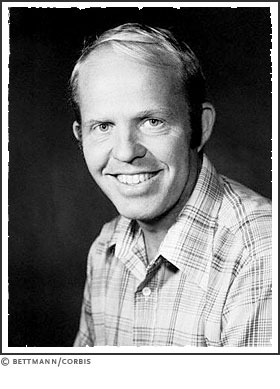
    Today in the courtroom we heard the case of Regents of the University of California v. Bakke with attorneys from both sides presenting their case to the jury. Allan Bakke was an intelligent man who applied to the medical school of the University of California twice and was denied both times. Bakke had a higher GPA than the sixteen minorities accepted into the school and sued due to his denial. Now we hear the case, first from the side of the University of California, the school's Diversity Program was citedThis program was instituted at the University of California to provide minorities with opportunities at the university that were historically declined after the history of discrimination our country holds. Arguing that a diverse student body should be in the government's interest, the attorneys for the University of California stated that with that diversity advances in education could be achieved as highlighted in the 1972 Sickle Cell Disease programs. African Americans hold knowledge that has been hidden for years that we can use to contribute to society. These sixteen seats held for African Americans are much more valuable than one white seat, argued the university. To close their argument, the attorneys for the school stated that America cannot function with one specific way of operating its education and employment opportunities and must allow for equal opportunity for all. 
Regents vs. Bakke by justicejferguson on emaze
    Now from the side of Allan Bakke, his attorneys argued through the Fourteenth Amendment's Equal Protection Clause and how it stated that everyone regardless of race was entitled to equal opportunity. Bakke's attorneys did highlight the "tragic history of injustice" in our nation but stated that creating new victims was not the solution to that problem. Bakke is described as a victim of discrimination as he was denied based on the color of his skin, argued his attorneys. Bias is shown in favor of minorities with a lesser degree of knowledge and intelligence due to the history of prejudice while the more qualified applicant is denied for something he had nothing to do with. A final argument made for Allan Bakke was the definition of economic efficiency being disregarded by his denial. By accepting lesser applicants into this great opportunity at the University of California, they may not succeed to the level Mr. Bakke could've if he were granted that opportunity. This means more money is spent to assist these applicants in areas that Mr. Bakke may not have needed assistance in leading to unnecessary funds being spent
    After hearing both sides of the case, the court finally came to a decision. In this decision, the diversity program of the university was deemed constitutional, however, it was deemed required to be adjusted. Minorities that cannot experience the high level of education and opportunity that many white people do, should not be punished for something they cannot control. On the other hand, the stronger applicants should not be punished due to the university attempting to diversify and favor lesser applicants and reject the stronger applicants. Therefore, the case ends as a split decision favoring both the University of California and Mr. Bakke leading to a change in the application decision for the university. 

Thursday, December 5, 2024

Heat of the Night


In the Heat of the Night [DVD]In the film, In the Heat of the Night the term "separate but equal" is one of high relevance that is portrayed throughout the film's storyline. This is particularly so for the Black citizens of the film's setting, Sparta, Mississippi. In Sparta, the Black citizens are treated quite unjustly and face racial prejudice daily in nearly everything they do. With segregation at an all-time high, Blacks and Whites were separated to an extreme in the town with Whites being rewarded with much more advantages in societal, personal, and professional lifestyles than the Blacks. Segregation and racial prejudice can be directly highlighted when Virgil Tibbs comes to town from Philadelphia and is arrested, without cause or evidence, and charged with murder. Once Chief of Sparta Police, Bill Gillespie, learns of Tibbs' profession, he releases the detective and uses him to solve the murder he was once charged with. While Tibbs resides temporarily in Sparta, he learns quickly of the racist trends of the townspeople and the segregation of the town itself. 

For Tibbs, to change the ways of Sparta would be an extreme uphill battle and one that he would not fight backed by many. However, to shift Sparta Tibbs takes his only potential action, to prove to the town a Black man is capable of working with the Whites for the common good. By doing so, Tibbs and Gillespie form a relationship built on respect and agreement. Of course, the start of their relationship was one of racism and segregation with Tibbs being arrested but shifts as Gillespie learns how skilled and helpful Tibbs was, he starts to respect him and treat him as an equal. The relationship between Tibbs and Gillespie reflects the shifting outlook of African Americans in America during the mid to late 1960s. While there was still segregation present, the old ways of violence and aggression were not as common with those skilled and knowledgeable African Americans finding a place in society among the Whites. 

After watching the film, I was left with an uplifted and positive feeling after the murder mystery was solved with the help of Tibbs and Gillespie together. The final scene at the train station between the two displayed the respect they had for each other and showed how society could change from the unjust and discriminatory ways of the past. If Tibbs and Gillespie could come to an agreement and pay their respects to one another after how their relationship commenced, any Black and White man could come to respect one another in the least. In essence, the final scene gave me hope for society to change as if I was watching it in the period it was envisioned to be in. 


In the film, women are very compressed in what they are entitled to and to do in society in the period of the film's setting. Women were not seen as equal to men and were deemed to only work in the house while men went out and contributed to the American economy. Women had the duty to provide for their husbands in the home and care for them and to wait on them. Mrs. Colbert, Delores Purdy, and Mamma Caleba, all have their place in society yet they all face similar restrictions of society as they are separate and not equal to the men of society. 


Mr. Endicott was a character that was not looking very favorably on as he struck a sense of fear into those who opposed him. However, he sheds his vulnerability to the Black people which he had discriminated against and with his powerful position in the town of Sparta, had advocated for segregation and prejudice, when he sheds tears for his past actions. Endicott is shown in a nursery crying displaying his pain and regret for supporting the system of discrimination and segregation and the psychological and emotional toll it took on him.In The Heat Of The Night (1967) | Mr. Tibbs Slaps Endicott | MGM Studios


The film was produced years before the Supreme Court's decision in Roe v. Wade, however, abortion and young pregnancy are displayed in the film. With Delores being forced into an abortion due to her pregnancy at a young age, the decision was never in her hands, which Roe v. Wade rules unlawful. As stated before, women were seen as less than men so the men made the decisions for women such as abortions and many other life choices. In this case, this is not separate but equal as the women are separated from the men in their societal, personal, and professional lifestyle but reap no benefit from that separation, only negatives. 


The characters of Officer Sam Wood, Harvey, and Ralph played parts in which they did not enjoy the privileges of being a white man in Sparta society. Wood and Harvey are both innocently accused of the murder of Colbert with Wood being arrested and nearly charged for the murder. Both men were judged and wronged by the very society in which they were the favorite and were supposed to enjoy advantages over others. As for Ralph, the true murderer, he will of course not enjoy privileges as he is convicted of the murder of Colbert and will rot in jail as a white man. 


In the Heat of the Night features a strong theme of change and a surprising ending brought on by the rare co-existence of Black and White men. This displayed the possibility of a world in which all people of America could live in peace and harmony together with no segregation or racial discrimination. A film unlike many that partook in the setting of the 1960s which instills hope in the future of a together America.

Wednesday, December 4, 2024

EOTO #4

The March on Washington for Jobs and Freedom, held on August 28th, 1963, was a pivotal event in the Civil Rights Movement. To this day it is one of the largest gatherings to demonstrate a fight against racial inequality in American history. Over two hundred and fifty thousand people all from different backgrounds, although the majority were African Americans, gathered in Washington, D.C. to demand an end to racial segregation and discrimination. They also called for economic justice, equal employment opportunities, and the protection of civil rights. 

This gathering was caused by the long history of racial oppression in America, specifically in the southern states, in which Jim Crow laws enforced segregation leading to widespread racial violence. However, racial oppression was not tied distinctly to the South as in the northern and western cities of America, African Americans faced unemployment, poor housing conditions, and limited access to a quality education. The March on Washington was a call to integrate the social and economic parts of American society in which African Americans faced severe inequalities.

This event was organized collectively by civil rights organizations, labor groups, and religious institutions. Key people in the organization matters include Phillip Randolph, leader of the Brotherhood of Sleeping Car Porters, along with Bayard Rustin, a civil rights activist who was an advisor to Martin Luther King Jr.

The central demands of the march were quite clear and held a powerful message, civil rights which included the end of racial segregation in public schools and accommodations, and federal influence to create fair employment practices. Apart from that, those who marched that day also called for the establishment of a national minimum wage and increased federal spending on public works to create jobs for African Americans. These demands highlighted the fact that economic inequality in America was as much of a roadblock to absolute freedom as racial discrimination.

The peak of the march was the deliverance of Martin Luther King Jr.’s iconic “I Have a Dream” speech just outside the Lincoln Memorial. In his speech, King outlined the vision of the march and his hope for a future where there was harmony and peace between races and justice in the economy of America. Directly quoted from Dr. King’s speech “I have a dream that one day this nation will rise and live out the true meaning of its creed.” In these words, Dr. King describes his vision of the future and how this nation could and will turn around and change its past ways of injustice. 

Following the March on Washington, President John F. Kennedy stood tall with Dr. King and all those speaking out to fight against racial injustice. Infamously both President Kennedy and Dr. King were assassinated before they could see the institution of what they viewed the new just America would be. Following JFK’s assassination, his successor Lyndon B. Johnson instituted the Civil Rights Act of 1964 and the Voting Rights Act of 1965. These new laws were both key parts of our legislation that laid the foundation to dismantle racism in the United States.


Trial #4 Reax.

     Today in the  courtroom  we heard the case of  Regents of the University of California v. Bakke   with  attorneys from both sides prese...